

By José Handal Bográn
Rotary Club San Pedro Sula
The communities of Palestina de Los Altos and Tuilcanabaj in Guatemala had an obsolete and inefficient infrastructure for collecting, conveying, and storing drinking water, generating countless problems for the communities. Furthermore, the scarce sanitation facilities, schools, and health centers exacerbated the risks of poor hygiene and disease.
The Guatemala Sur (District 4250) and Cupertino (District 5170) clubs worked together with the Huehuetenango, Altos de Huehuetenango, and Quetzaltenango clubs, along with World Vision, on a global grant of over US$ 800 000.00 to break the cycle of structural poverty through the Water, Sanitation, and Hygiene nexus. After ensuring access to quality water, the communities were trained to efficiently manage and maintain the system.
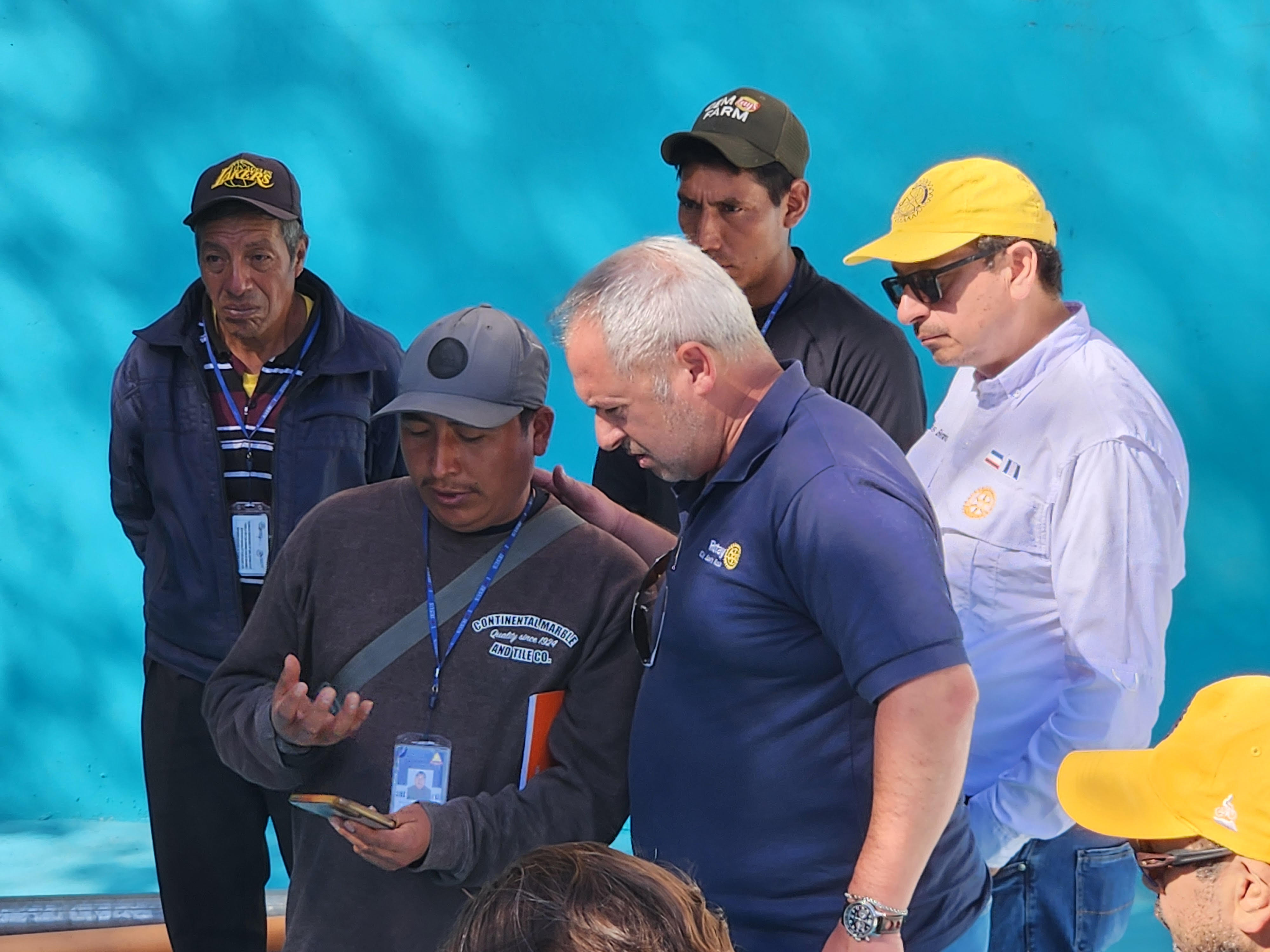
Jorge Javier Lezcano is a member of Club Rotary Santa Rosa (District 4921) and CADRE since 2020. He visited the project and among his recommendations were measuring the impact of gastrointestinal diseases and reducing absenteeism among girls during their menstrual period, as well as promoting the circular economy through the recovery and use of greywater in a potential extension of the project to the Regadíos community in Aguacatán.
Beyond the immediate health and hygiene benefits, it was concluded that access to water dignifies rural life and helps mitigate irregular migration.